


Lab Equipment Exporters in Zimbabwe
Searching for lab equipment exporters in Zimbabwe can feel like looking for a needle in a haystack. Zimbabwe has a growing science and healthcare sector, yet the exporter landscape is small, scattered and not always easy to verify online.
If you run a lab, a trading company or a distribution business in India, this guide is for you. We will look at how the Zimbabwean market really works, what to check before you trade, and how to build a safe, profitable supply chain.
Understanding the Lab Equipment Market in Zimbabwe
Before you contact anyone, it helps to see the bigger picture. Zimbabwe’s demand for laboratory instruments comes from hospitals, universities, mining companies, agricultural research stations and water-testing bodies.
Here is the honest reality: most scientific equipment used in Zimbabwe is imported. Local firms mainly act as distributors, agents and service providers rather than manufacturers. So when people search for lab equipment exporters in Zimbabwe, they usually find re-exporters, regional traders or equipment suppliers that serve neighbouring countries.
That is not a bad thing. It simply means you need to ask the right questions.
Key Sectors Driving Demand
- Healthcare and diagnostics: hospital labs, pathology centres and public health programmes
- Mining and minerals testing: assay labs, sample preparation and analytical instruments
- Agriculture and food testing: soil analysis, seed testing and quality control
- Education and research: university science departments and technical colleges
- Water and environmental testing: monitoring of drinking water and industrial effluent
Why Indian Buyers Look Towards Zimbabwe
India and Southern Africa share a long trading relationship. Indian businesses are already familiar with African markets, and many are looking for new partners, new customers or regional sourcing options.
There are a few common reasons Indian buyers explore Zimbabwean contacts:
- Finding agents who understand local import rules and customer needs
- Reaching buyers in mining, health and education across Southern Africa
- Sourcing specific second-hand or surplus instruments available in the region
- Building long-term distribution partnerships
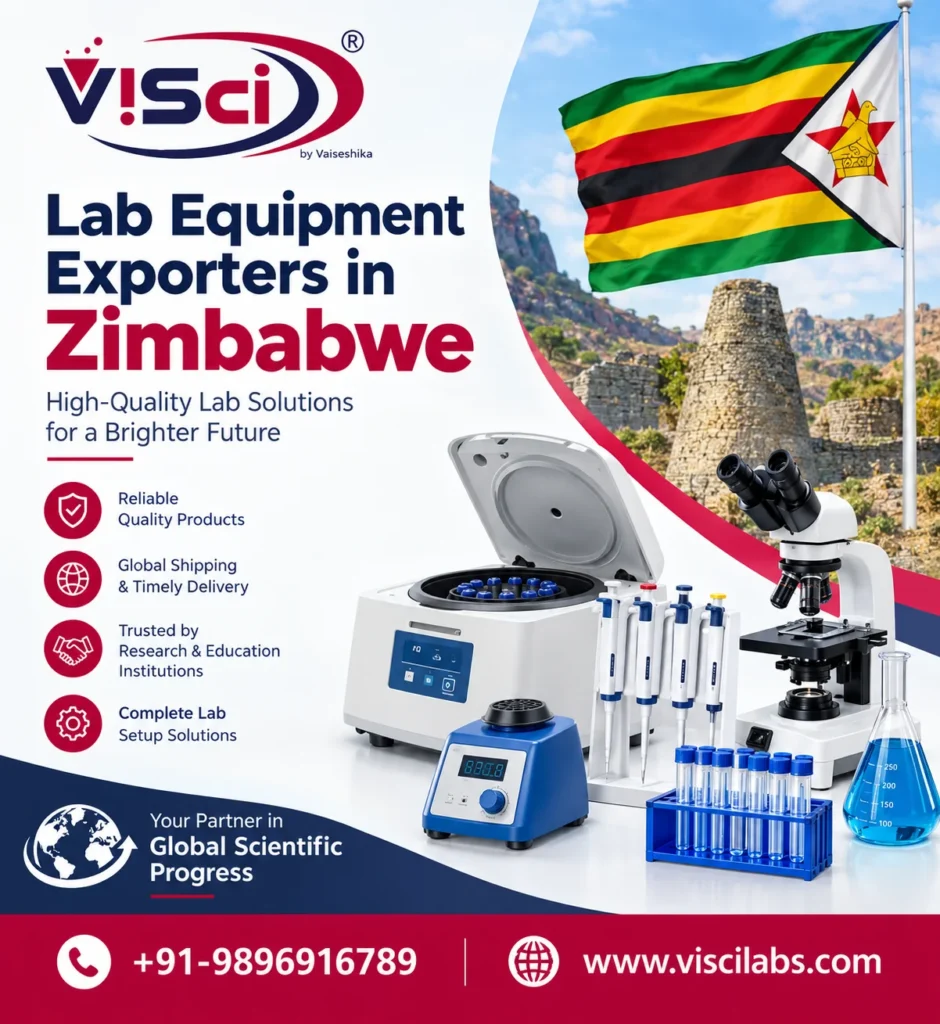
In many cases, the smarter move is not only to buy from Zimbabwe but also to supply into it. Indian manufacturers offer a wide range of laboratory equipment, including microscopes, centrifuges, incubators, glassware, balances and analytical instruments, often at competitive prices.
Types of Laboratory Equipment Traded in the Region
When you speak to lab equipment exporters in Zimbabwe or regional distributors, these are the product groups you are most likely to encounter:
General Laboratory Instruments
Hot air ovens, water baths, magnetic stirrers, pH meters, hot plates and analytical balances are always in steady demand.
Analytical and Testing Equipment
Spectrophotometers, moisture analysers, titration systems and sample preparation tools are popular with mining and food-testing labs.
Laboratory Consumables
Glassware, plasticware, filter papers, reagents and safety supplies need regular restocking, which makes them attractive for repeat business.
Medical and Diagnostic Devices
Microscopes, centrifuges, incubators and basic diagnostic tools are widely needed in clinics and teaching hospitals.
How to Evaluate a Lab Equipment Exporter
Trust is everything in international trade. Whether you are dealing with a Zimbabwean company or an agent in the wider region, run through this checklist first.
1. Verify Company Registration
Ask for business registration documents and tax details. A genuine exporter will share these without fuss.
2. Check Product Authenticity and Quality
Request manufacturer details, model numbers, calibration certificates and warranty terms. For used equipment, ask for service history and clear photographs or video.
3. Ask About Certifications
Depending on the product, look for ISO standards, CE marking or other relevant quality credentials.
4. Understand Export and Import Rules
Customs duties, import permits and shipping documents differ by product type. Confirm who handles clearance and who carries the cost.
5. Start Small
Place a trial order before committing to bulk purchases. It is the easiest way to judge communication, packing and delivery reliability.
Common Challenges and How to Handle Them
Trading across borders is rewarding, but it is rarely effortless. Be ready for these issues:
- Limited online visibility: many suppliers have thin websites, so verify through multiple channels and references.
- Payment risks: use secure methods such as letters of credit or escrow-style arrangements for first deals.
- Logistics delays: shipping to or from landlocked Zimbabwe may involve port transit and extra handling time.
- After-sales service: delicate instruments need installation support and spare parts, so agree on this upfront.
Practical Tips for Indian Businesses
Here are a few simple steps that make a big difference:
- Use trade directories, chambers of commerce and export promotion bodies to find genuine contacts.
- Request a proforma invoice and compare it with market prices.
- Insist on proper packaging for fragile glassware and electronic instruments.
- Keep clear written agreements on delivery timelines, warranties and returns.
- Compare options with established Indian suppliers. A well-known platform such as Visci Labs can help you gauge typical product ranges and quality benchmarks before you negotiate with anyone abroad.
The Bigger Opportunity: Two-Way Trade
Instead of treating Zimbabwe only as a place to source goods, think of it as a market. Labs there often need reliable, affordable equipment with good support. Indian suppliers are well placed to meet that need.
By partnering with local agents, you can offer installation guidance, training and spare parts. That is the kind of service that turns a one-time sale into a lasting relationship.
Final Thoughts
Finding trustworthy lab equipment exporters in Zimbabwe takes patience, research and a careful eye. The market is smaller than many people expect and is mostly built around distribution, but it holds real potential for those who do their homework.
Verify every partner, start with small orders and keep communication clear. Combine that with the strength of Indian laboratory equipment manufacturing, and you can build a trade link that benefits both sides. Take your time, stay curious and let quality, not just price, guide your decisions.
Frequently Asked Questions (FAQs)
1. Are there many lab equipment exporters in Zimbabwe?
Not many. Zimbabwe mainly imports scientific equipment, so most businesses are distributors or agents rather than large-scale manufacturers or exporters. Careful research is essential.
2. How can I verify a Zimbabwean lab equipment supplier?
Check business registration, ask for references, request product certifications and, if possible, arrange a video call or site visit. Always start with a small trial order.
3. What lab equipment is in highest demand in Zimbabwe?
Microscopes, centrifuges, incubators, balances, pH meters, glassware and testing instruments for mining, agriculture, healthcare and water analysis are among the most requested items.
4. Can Indian companies supply lab equipment to Zimbabwe?
Yes. Indian manufacturers and suppliers can export a wide range of laboratory products, subject to import regulations, documentation and agreed shipping terms.
5. What documents are needed for exporting lab equipment?
Typically a commercial invoice, packing list, bill of lading or airway bill, certificate of origin and any product-specific certificates or permits. Requirements vary, so confirm with your freight forwarder and customs agent.
Most Searched Keywords
- Lab Equipment Exporters in Zimbabwe
- Top Lab Equipment Exporters in Zimbabwe
- Best Lab Equipment Exporters in Zimbabwe
- Lab Equipment in Zimbabwe
- Laboratory Equipment Exporters in Zimbabwe