

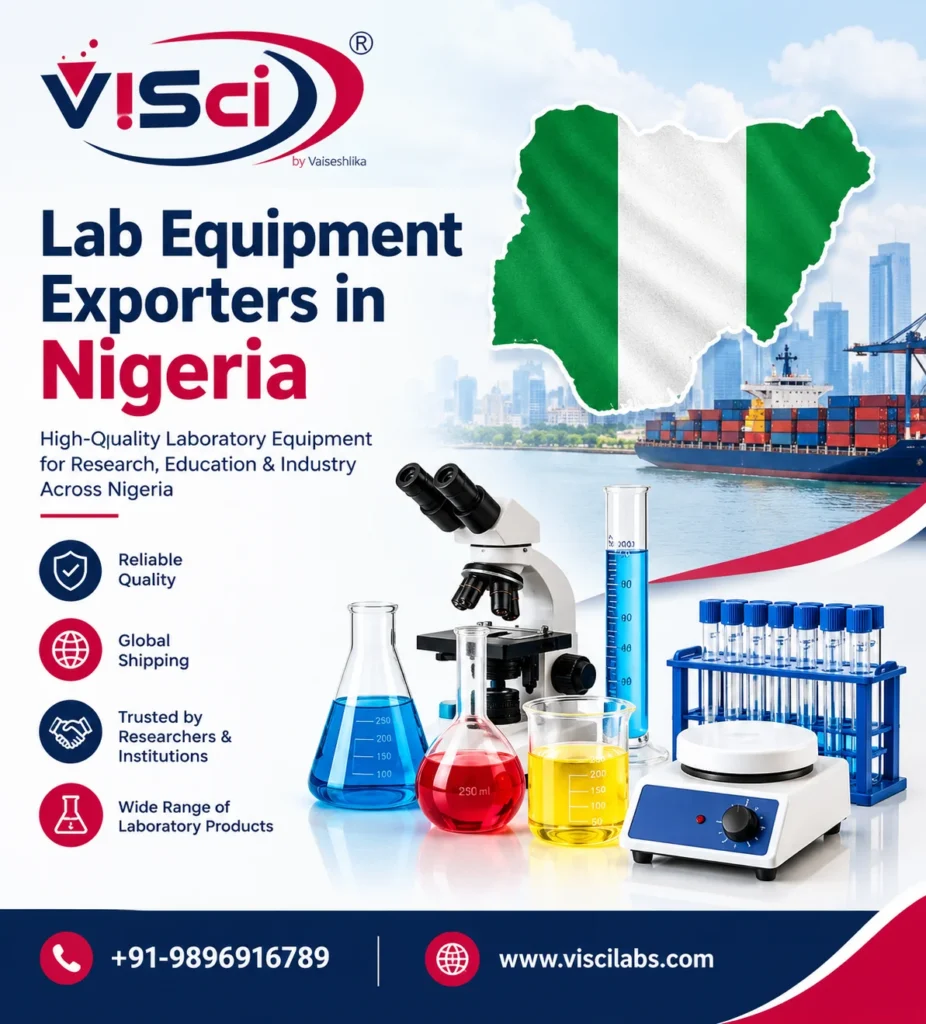
Lab Equipment Exporters in Nigeria
Nigeria has the largest population in Africa and a fast-growing healthcare, education and research sector. All of that needs laboratory equipment: microscopes, centrifuges, incubators, balances, glassware and much more.
If you are an Indian business looking at West Africa, you have probably searched for lab equipment exporters in Nigeria. The answer is more nuanced than most articles admit. This guide explains how the market really works, who the players are, and how to find reliable partners.
Understanding the Lab Equipment Market in Nigeria
Nigeria imports most of its scientific instruments. Local manufacturing of advanced lab equipment is limited, so much of the trade involves distributors, importers and re-exporters rather than large-scale manufacturers.
So when people talk about lab equipment exporters in Nigeria, they usually mean one of three groups:
- Local distributors and re-exporters who import equipment and supply it across West Africa
- Small manufacturers making basic items such as simple glassware, furniture or consumables
- Trading companies that source from Asia, Europe and the Americas and serve institutional buyers
Knowing this early saves time. Indian suppliers often get better results by partnering with Nigerian distributors than by looking for manufacturers who barely exist.
Why Nigeria Matters to Indian Lab Equipment Businesses
India already supplies scientific instruments to many African countries, and Nigeria is an attractive market for several reasons:
- Large demand base: Universities, hospitals, diagnostic centres, pharmaceutical units and government agencies all need equipment.
- Price sensitivity: Indian-made equipment is often competitive on cost without compromising on quality.
- Growing healthcare investment: More diagnostic labs and research centres are opening in major cities.
- Regional reach: A strong partner in Nigeria can open doors in neighbouring countries.
Types of Lab Equipment in Demand
Whether you are sourcing from or selling to lab equipment exporters in Nigeria, these categories see steady demand:
Basic Laboratory Instruments
Analytical balances, pH meters, hot plates, magnetic stirrers, water baths and hot air ovens. Schools and colleges buy these in volume.
Clinical and Diagnostic Equipment
Centrifuges, microscopes, hematology analyzers, incubators and sterilizers. Hospitals and private diagnostic centres are the main buyers.
Research and Analytical Equipment
Spectrophotometers, PCR machines, laminar air flow cabinets and autoclaves, mostly for universities and pharmaceutical research.
Consumables and Glassware
Test tubes, beakers, pipettes, petri dishes and reagents. These are repeat-purchase items and a good way to build long-term relationships.
How to Find Reliable Lab Equipment Exporters in Nigeria
Finding a trustworthy partner takes some homework. Here is a simple process:
- Check company registration. Verify registration with the Corporate Affairs Commission (CAC) and ask for a tax identification number.
- Ask for references. A genuine supplier can name past clients such as hospitals, universities or research labs.
- Look at product range. A credible exporter or distributor stocks recognisable brands and can share catalogues and spec sheets.
- Request samples or trial orders. Start small before committing to bulk shipments.
- Use trade platforms and expos. Industry exhibitions and B2B directories help you meet suppliers in person or virtually.
- Verify through banks and chambers of commerce. Trade bodies and banks can often confirm whether a company is legitimate.
If you are on the supply side, an established Indian laboratory equipment provider such as Visci Labs is a good reference point for the kind of range and documentation buyers expect.
Compliance, Standards and Documentation
Cross-border trade in scientific equipment involves paperwork. Missing documents cause delays at the port, so prepare these in advance:
- Commercial invoice and packing list
- Certificate of origin
- Product certifications and quality documents (ISO, CE or equivalent where applicable)
- Bill of lading or airway bill
- Import permits or product registration, where required for medical or diagnostic items
Nigerian regulators, including the Standards Organisation of Nigeria (SON) and NAFDAC for certain health-related products, may have specific requirements. Rules change, so always confirm current regulations with your Nigerian partner or a customs clearing agent before shipping.
Common Challenges and How to Handle Them
Payment risk. Use letters of credit or staged payments for first-time deals rather than full advance payment.
Logistics delays. Port congestion can happen. Build extra time into delivery schedules and work with experienced freight forwarders.
Currency fluctuations. Naira volatility can affect pricing. Quote in a stable currency such as USD and review terms regularly.
After-sales support. Buyers want installation, training and spare parts. Partners who offer this stand out from the competition.
Tips for Indian Suppliers Entering the Nigerian Market
- Build a relationship with a local distributor who understands customs and buyer needs.
- Offer clear warranties and accessible technical support.
- Provide training materials, ideally in simple English with visuals.
- Be consistent. Reliability matters more than the lowest price.
- Stay active in trade communities, both online and at events.
Future of Lab Equipment Trade with Nigeria
Investment in healthcare, education and local research is likely to keep demand rising. As this happens, the role of lab equipment exporters in Nigeria will probably expand, especially distributors who serve the wider West African region. For Indian businesses, the opportunity is real but rewards those who are patient, compliant and service-focused.
Conclusion
The market for lab equipment exporters in Nigeria is smaller and more distribution-driven than many expect, but it offers solid opportunities for businesses that approach it carefully. Verify every partner, understand the regulations, start with manageable orders and prioritise after-sales support. Do that, and Nigeria can become a dependable part of your export or sourcing strategy.
If you want to see what a modern lab equipment range looks like, explore the catalogue at Visci Labs.
Frequently Asked Questions
1. Are there many lab equipment exporters in Nigeria?
Not many manufacture advanced equipment locally. Most exporters are distributors or trading companies that import instruments and supply them within Nigeria and nearby countries.
2. Can Indian companies sell lab equipment to Nigeria?
Yes. India is a competitive source of affordable, quality instruments. Working through a verified local distributor makes market entry smoother.
3. What documents are needed to export lab equipment to Nigeria?
Typically a commercial invoice, packing list, certificate of origin, bill of lading and relevant quality certifications. Some products need import permits or registration, so check current rules first.
4. How do I verify a lab equipment supplier in Nigeria?
Confirm CAC registration, request client references, review their product catalogue, and consider a small trial order before placing larger purchases.
5. Which lab equipment is most in demand in Nigeria?
Basic instruments, microscopes, centrifuges, incubators, autoclaves, diagnostic devices and consumables such as glassware and reagents see consistent demand.
Most Searched Keywords
- Lab Equipment Exporters in Nigeria
- Top Lab Equipment Exporters in Nigeria
- Best Lab Equipment Exporters in Nigeria
- Lab Equipment in Nigeria
- Lab Equipment Exporters Nigeria