

Wash Bottle Manufacturers in India
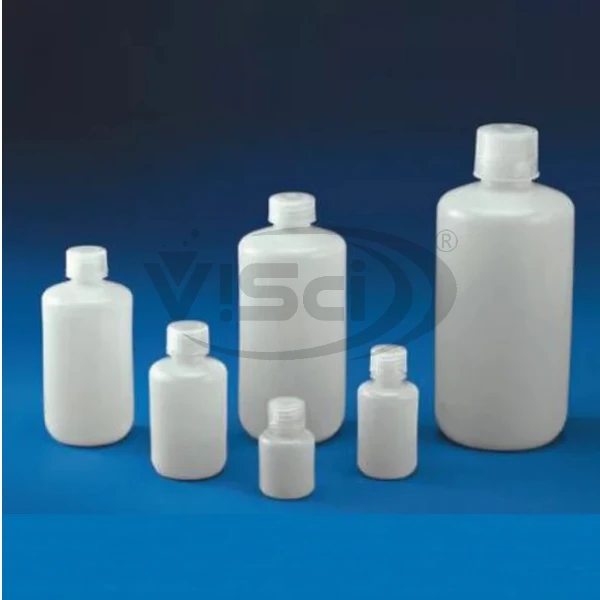
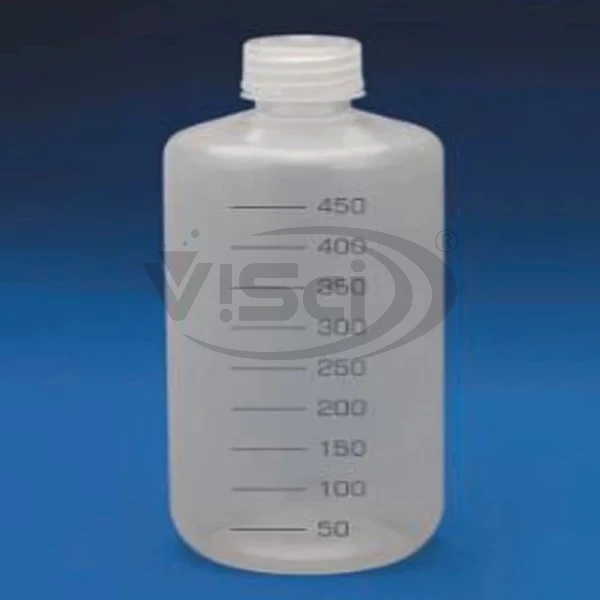


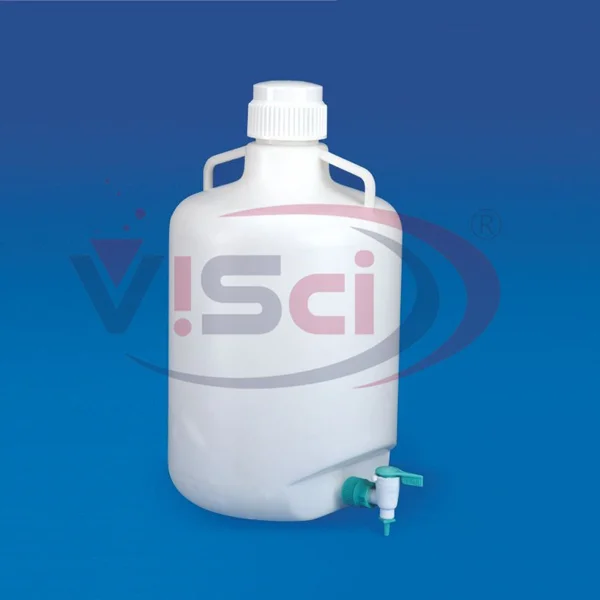

In any laboratory — whether a bustling pharmaceutical quality control unit, a school chemistry room, a hospital diagnostic lab, or a cutting-edge research facility — the wash bottle is one of the most frequently used accessories. Small in size but significant in function, wash bottles allow precise, controlled dispensing of distilled water, solvents, and reagents for rinsing glassware, washing precipitates, moistening filter papers, and maintaining cleanliness across the lab bench.
For procurement managers, lab supervisors, and scientific buyers across the country, selecting the right wash bottle manufacturers in India ensures consistent quality, chemical compatibility, and uninterrupted supply — all at a price point that aligns with Indian laboratory budgets.
This guide covers everything you need to know about lab wash bottles — their types, materials, applications, and the key criteria for selecting a reliable manufacturer in India.
What Is a Laboratory Wash Bottle?
A laboratory wash bottle is a squeezable, narrow-spouted container used to dispense liquids in a controlled stream. Unlike pouring from a reagent bottle, a wash bottle allows the user to direct a fine jet of liquid precisely where it is needed — whether rinsing the inner wall of a beaker, transferring a precipitate onto a filter, or wetting a sample.
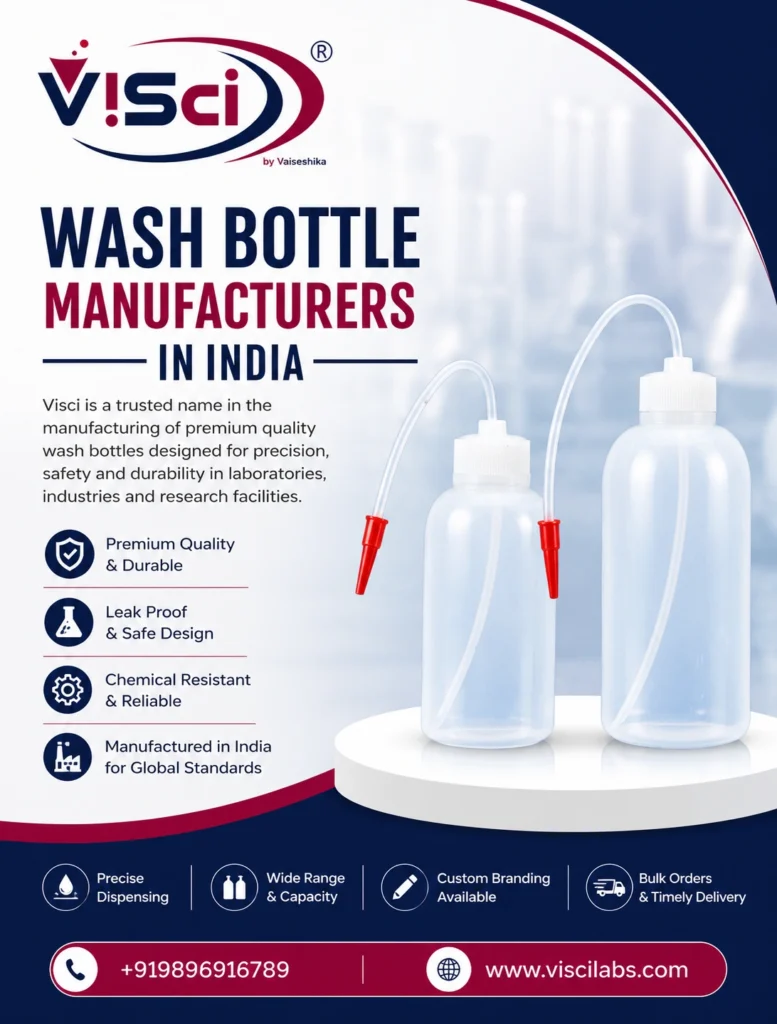
Wash bottles are typically made from low-density polyethylene (LDPE) or high-density polyethylene (HDPE), which allows the body to be squeezed and released easily. They are fitted with a narrow dispensing tube — either a simple spout cap or a two-tube assembly (one for squeezing air in, one for directing the liquid out).
Types of Wash Bottles Manufactured in India
Indian manufacturers produce wash bottles in a variety of designs, materials, and capacities to suit different laboratory requirements:
LDPE Wash Bottles
Low-density polyethylene wash bottles are the most widely used type in laboratories. Their flexibility makes them easy to squeeze, producing a controlled jet of liquid. LDPE is compatible with water, dilute acids and bases, and many aqueous solutions, making these bottles suitable for general laboratory use. They are available in capacities ranging from 250 ml to 1000 ml.
HDPE Wash Bottles
High-density polyethylene offers greater rigidity and chemical resistance compared to LDPE. HDPE wash bottles are preferred when working with stronger chemicals or when the bottle needs to withstand repeated handling without deforming. They are commonly used in industrial and pharmaceutical labs.
Polypropylene (PP) Wash Bottles
Polypropylene wash bottles offer excellent chemical resistance and can withstand higher temperatures — making them autoclavable. They are the preferred choice in microbiology, cell culture, and pharmaceutical environments where sterilisation is required.
Safety-Labelled Wash Bottles
Colour-coded wash bottles with pre-printed labels (for water, ethanol, acetone, methanol, isopropanol, and other common solvents) are manufactured for use in labs where multiple solvents are in simultaneous use. Colour coding prevents accidental cross-contamination and is an important safety feature in busy laboratories.
Wide-Mouth Wash Bottles
Designed for easy filling and cleaning, wide-mouth variants are increasingly popular in laboratories that need to refill wash bottles quickly or switch between different reagents.
Wash Bottles with Two-Tube Assemblies
In this design, one tube draws air into the bottle when squeezed while a separate tube directs the liquid out through the spout, producing a more consistent and controllable flow. These are particularly useful for precise rinsing during analytical procedures.
Materials Used in Wash Bottle Manufacturing
The choice of material directly determines a wash bottle’s chemical compatibility, durability, and suitability for specific applications:
LDPE (Low-Density Polyethylene): Soft, flexible, and ideal for general-purpose lab use. Compatible with water, most aqueous solutions, and dilute solvents.
HDPE (High-Density Polyethylene): Stiffer than LDPE, with better resistance to a wider range of chemicals including strong acids and bases.
Polypropylene (PP): The most chemically resistant of the three, autoclavable, and suitable for use with aromatic solvents and pharmaceutical applications.
Borosilicate Glass: While less common than plastic variants, glass wash bottles are used in applications where organic solvents would degrade plastic — such as when dispensing concentrated acetone, chloroform, or other aggressive chemicals.
Reputable wash bottle manufacturers in India use virgin-grade raw materials (not recycled plastics) to ensure consistent chemical resistance, structural integrity, and compliance with laboratory safety standards.
Applications of Wash Bottles Across Laboratory Settings
Wash bottles are used across virtually every type of laboratory:
Chemistry and Analytical Labs: Rinsing glassware (beakers, flasks, burettes), washing precipitates on filter papers, and transferring quantitative samples with minimal loss.
Microbiology and Cell Culture Labs: Dispensing sterile water, PBS buffer, or ethanol for surface decontamination and aseptic technique procedures.
Pharmaceutical Quality Control Labs: Rinsing sample containers, cleaning analytical glassware between tests, and dispensing mobile phase solvents during HPLC sample preparation.
Hospital and Diagnostic Labs: Rinsing staining trays, cleaning slides, and dispensing reagents during histopathology and clinical chemistry procedures.
Educational Institutions: An indispensable part of every school and college chemistry laboratory, used daily during practical sessions for rinsing and reagent dispensing.
Environmental Testing Labs: Cleaning sample containers between tests and rinsing the filtration apparatus during water and soil analysis procedures.
Why Indian Wash Bottle Manufacturers Are a Smart Choice
India has developed a robust plasticware manufacturing sector capable of producing high-quality laboratory consumables that meet both domestic and international standards. Here is why sourcing from Indian wash bottle manufacturers makes practical sense:
Competitive Pricing: Indian manufacturers offer wash bottles at significantly lower price points than imported alternatives, without compromising on material quality or dimensional accuracy — an important consideration for labs procuring in bulk.
Bulk Supply Capability: Hospitals, pharmaceutical companies, and educational institutions with high-volume requirements benefit from the ability to place large orders with domestic manufacturers who can fulfil them reliably and quickly.
Short Lead Times: Domestic supply chains dramatically reduce delivery times compared to international procurement, ensuring labs are never left without essential consumables.
Customisation: Many Indian manufacturers offer custom labelling, colour coding, and private-label options for institutions, hospital chains, and distributors looking for branded lab consumables.
Export-Quality Standards: Leading Indian wash bottle manufacturers export to regulated markets across the Middle East, Southeast Asia, and Africa — a clear indicator that their products meet internationally recognised quality benchmarks.
What to Look for When Choosing a Wash Bottle Manufacturer in India
With numerous suppliers in the market, here is how to identify a manufacturer you can trust:
Virgin Raw Materials: Always ask whether the manufacturer uses virgin-grade LDPE, HDPE, or PP — not recycled material. Virgin plastic ensures consistent chemical resistance and prevents unexpected degradation.
Leak-Proof Design: A high-quality wash bottle must have a secure, leak-proof cap and spout assembly. Ask for product samples and test them before committing to bulk orders.
Wall Thickness Consistency: Uniform wall thickness ensures consistent squeezability and prevents stress fractures during use. This is a sign of well-controlled injection moulding or blow moulding processes.
Chemical Compatibility Documentation: Reputable manufacturers provide chemical resistance charts for their products, allowing buyers to confirm suitability for specific reagents and solvents.
ISO Certification: ISO 9001:2015 certification indicates the manufacturer operates under a structured quality management system, reducing the risk of batch-to-batch variability.
Range of Sizes and Types: A manufacturer with a comprehensive wash bottle catalogue — covering multiple capacities, materials, and label variants — can serve as a one-stop supplier, simplifying procurement.
Visci Labs: Trusted Wash Bottle Manufacturers in India
When you are looking for dependable wash bottle manufacturers in India, Visci Labs delivers laboratory plasticware built to the standards that modern labs demand. Offering a comprehensive range of LDPE, HDPE, and polypropylene wash bottles in multiple capacities and configurations — including safety-labelled and colour-coded variants — Visci Labs combines quality raw materials, precise manufacturing, and consistent supply to keep your laboratory running without interruption. Whether you are equipping a research institution, a pharmaceutical QC lab, a hospital, or an educational facility, Visci Labs is the supplier you can count on for quality lab consumables every time. Explore the complete range at viscilabs.com and place your enquiry today.
Frequently Asked Questions
Q.1 What is the most commonly used material for laboratory wash bottles? Low-density polyethylene (LDPE) is the most widely used material for laboratory wash bottles due to its excellent flexibility, ease of squeezing, and compatibility with water, dilute acids, dilute bases, and most aqueous solutions. For more chemically demanding applications or where sterilisation is required, polypropylene (PP) wash bottles are preferred, as they offer superior chemical resistance and can be autoclaved.
Q.2 Can wash bottles be used with organic solvents like acetone or ethanol? It depends on the material. LDPE wash bottles are suitable for ethanol and isopropanol but may not be compatible with concentrated acetone, chloroform, or other aggressive organic solvents. For such solvents, HDPE or polypropylene wash bottles offer better chemical resistance. For highly aggressive organic solvents, borosilicate glass wash bottles are the safest choice. Always check the manufacturer’s chemical compatibility chart before use.
Q.3 What sizes of wash bottles are typically available from Indian manufacturers? Indian wash bottle manufacturers generally offer a standard range of capacities — 125 ml, 250 ml, 500 ml, and 1000 ml — to suit different laboratory applications. Smaller sizes (125–250 ml) are ideal for precision rinsing tasks, while larger sizes (500–1000 ml) are commonly used at the general lab bench for routine glassware rinsing and reagent dispensing.
Q.4 Are colour-coded or safety-labelled wash bottles available in India? Yes. Leading wash bottle manufacturers in India produce colour-coded and pre-printed safety-labelled wash bottles for common laboratory solvents and reagents — including distilled water, ethanol, acetone, methanol, isopropanol, and hexane. Colour coding is an important safety practice in laboratories where multiple solvents are in simultaneous use, significantly reducing the risk of accidental cross-contamination.
Q.5 How should laboratory wash bottles be cleaned and maintained? Wash bottles should be emptied completely after use, rinsed thoroughly with distilled water, and left open to air-dry before refilling. They should never be used to store reagents long-term, as prolonged contact with certain chemicals can degrade the plastic. Polypropylene wash bottles can be autoclaved for sterilisation, while LDPE and HDPE bottles should be cleaned with mild detergent and rinsed thoroughly. Bottles showing signs of discolouration, cracking, or deformation should be replaced immediately to prevent contamination or accidental spills.
Most Searched Keywords
- Wash Bottle Manufacturers in India
- Top Wash Bottle Manufacturers in India
- Best Wash Bottle Manufacturers in India
- Wash Bottle Manufacturers
- Wash Bottle Manufacturer India